
A trading award application is a file, not a nomination. The editorial desk reads it in one order: evidence first, claim second, narrative never. This is what the file has to contain, when it has to arrive, and which omissions close it before a single record reaches the jury.
What a trading award application contains
Two parts. The evidence: a full-year statement, read-only verification access, a cash-flow record and proof of ownership. The claim: the category entered and the result declared. The claim is read last, and only if the evidence survives. A file whose numbers cannot be reconstructed by a third party is not scored badly; it is not scored at all.
The methodology is public for the same reason the evidence is standardised. Two candidates in the same category have to be comparable on the same three measures: net return over a full calendar year, maximum drawdown, and the distribution of monthly results. Whatever a candidate cannot support with one of the four documents stays out of the table, however true it may be.
The four documents that carry the file
- A continuous full-year statement. Exported by the broker or the platform, never by the candidate. Twelve closed months, no gaps, dates visible on every page.
- Read-only verification access. An analyst link or auditor credentials that let the desk see the account without touching it. A screenshot is an assertion. A read-only link is evidence.
- A cash-flow record. Every deposit and every withdrawal, with dates and amounts. Without it no declared return can be recalculated, and every declared return is recalculated.
- Proof of account ownership. The name on the statement and the name on the entry have to match, or the file needs a documented mandate explaining why they do not.
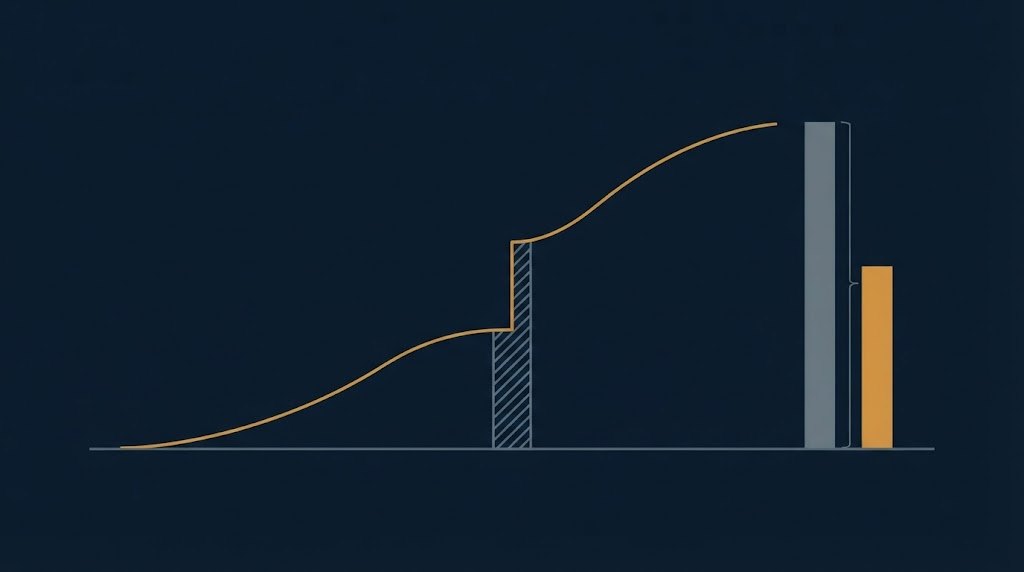
The third document is the one candidates treat as paperwork and the desk treats as the heart of the file. A worked example, with round figures invented here for the explanation, shows why. An account opens the year at 50,000 euros and closes at 61,000, with a single deposit of 5,000 made at the start of July. On screen, 61,000 against 50,000 reads as 22%. The trading result is 61,000 minus 50,000 minus the 5,000 paid in: 6,000 euros. That is 12% on the opening capital. Against the average capital employed over the year, 52,500 euros, since the extra 5,000 only worked for six of the twelve months, it is 11.4%. One account, three numbers, ten points between the flattering figure and the honest one. The cash-flow record is what turns 22% back into 12%.
Deadlines, and why the calendar year is the unit
Entries open once the final month of the year has closed, and the closing date is published with the methodology at the start of each cycle. The deadline is not administrative housekeeping. It protects the unit of measurement: a statement that stops in mid-December is not a full year, and cannot sit in the same table as one that runs to the last session.
A file may be completed after submission, but only with documents that already existed when the window closed. A fresh statement covering a better stretch of months is not a correction. It is a different entry, and it belongs to the next cycle.
One practical consequence for a trading award application: a trader who started in March has no full calendar year until the following December. The record is not weak. It is not yet measurable, and a file in that position is held over, not rejected.
Eligibility: two exclusions and two special cases
Two kinds of entry are barred outright. Two more are accepted, but never read against the same benchmark as a private account.
- Simulated and demo accounts. Excluded. No execution, no slippage, no financing cost. Nothing to audit.
- Anonymous entries. Excluded. Ownership has to be provable. A pseudonym can appear in public, not in the file.
- Funded accounts from a prop firm. Judged apart. The capital is not the candidate's and the risk limits are set by someone else, so these files are read against the firm's own rules rather than against private accounts.
- Managed money. Admitted with conditions. The mandate has to be attached and the returns stated at investor level, after fees. Gross performance of a fund is not what anyone received.
Inside the table, percentage return decides the ranking, and that rule stops working at the small end. Two invented years show where: 300% on a 1,000 euro account is 3,000 euros of profit, while 15% on a 400,000 euro account is 60,000. Twenty times the money, on a headline twenty times smaller. In the first case a single position moves the whole balance. Account size and maximum drawdown are therefore read alongside the percentage, never after it.
Four omissions that close a file early
This desk keeps one entry as a standing reminder. In a recent cycle the strongest risk-adjusted record in its category never reached the jury: the statement attached covered eleven months, and by the time the candidate answered the query, the window had closed. Nothing was wrong with the trading. The evidence had been assembled last, in a hurry, and the four omissions below come from that same habit.
- A statement exported by the candidate. A spreadsheet of trades typed by the person being judged proves effort, not performance.
- Returns declared gross. Net of commissions, spreads, swaps and financing, or the figure cannot be compared with anyone else's.
- No drawdown figure. The desk computes it from the statement anyway, and the computed number is usually worse than the remembered one.
- An unexplained change of broker. Moving mid-year is ordinary. Submitting only the half that went well is not.
Frequently asked questions
Can a trading award application be filed without a full year of history? No, and nothing is lost by waiting. Statements do not expire, an entry held over for length carries no mark against the candidate, and a record that is short this cycle is usually complete in the next one.
Do losing months disqualify a candidate? No. Consistency is measured as the spread of monthly results, not as an unbroken run of green months. A year with two moderate losses and a controlled drawdown reads better than a year rescued by one outsized trade.
Can a third party nominate someone? A name can be suggested by anyone, but the file still has to come from the account holder. Nobody else can grant read-only access, supply the cash-flow record or prove ownership, and without those three the nomination stays a suggestion.
Key points
- The file is evidence first: full-year statement, read-only access, cash-flow record and proof of ownership.
- Every declared return is recalculated, so deposits and withdrawals have to be dated and disclosed.
- The calendar year is the unit. A partial year is not a weak entry, it is an unmeasurable one.
- Percentage return is read together with account size and maximum drawdown, never on its own.
- Most files that fail, fail on paperwork assembled in a hurry, not on the quality of the trading.